


AI Startups to Watch
Artificial intelligence is no longer a concept limited to science fiction. In recent years, AI startups have emerged as game-changers across multiple industries. From healthcare and finance to retail and transportation, AI is revolutionizing how businesses operate and how consumers interact with technology. If you are a tech enthusiast, investor, or simply curious about the future of innovation, understanding which AI startups are making waves can be invaluable.
AI startups to watch are not only attracting massive funding but also demonstrating real-world applications that solve complex problems. These companies are leveraging machine learning, natural language processing, computer vision, and other AI technologies to improve efficiency, reduce costs, and enhance user experiences. For beginners and intermediate readers, exploring these startups offers a unique opportunity to witness cutting-edge innovation firsthand.
In this article, we will break down what AI startups are, why they are important, and provide a detailed guide to some of the most promising companies in the space. We will also discuss the benefits, risks, common mistakes, and expert tips for anyone interested in keeping an eye on this rapidly evolving sector. By the end of this comprehensive guide, you will have a clear understanding of the AI startup landscape and be ready to make informed decisions, whether for investment, collaboration, or knowledge.
Table of Contents
What is AI Startups?
AI startups are young companies focused on developing products or services that use artificial intelligence technologies. Unlike traditional tech firms, AI startups center their innovation around algorithms, machine learning models, or intelligent systems that can mimic human decision-making.
These startups often begin with a unique problem-solving approach. For instance, some focus on predictive analytics for businesses, while others work on automated healthcare diagnostics or autonomous vehicles. The defining feature of an AI startup is its reliance on data-driven insights, advanced computing, and continuous learning systems to enhance performance.
In essence, AI startups bridge the gap between raw technology and practical applications. They transform AI concepts into tangible solutions that improve efficiency, save time, and provide smarter ways to manage everyday tasks. Some may operate in niche markets, while others aim for broad applications that could impact millions worldwide.
You May Also Like It
Productivity Hacks 2025: Boost Your Efficiency Every Day
DIY Tech Tips: A Complete Guide for Beginners and Enthusiasts
Software Tutorials Step by Step | Easy Learning Guide
Why is AI Startups Important?
AI startups play a critical role in shaping the future of technology and business. Their importance can be understood from several perspectives:
- Innovation Drivers: AI startups push the boundaries of what is possible. They experiment with new algorithms and create solutions that established companies may not explore due to risk aversion.
- Economic Impact: By creating jobs and attracting investment, AI startups contribute to economic growth. Venture capitalists and tech investors actively seek promising AI startups to diversify portfolios.
- Problem Solving: These startups tackle challenges across various industries. For example, AI-powered diagnostic tools are improving healthcare outcomes, while intelligent logistics systems optimize supply chains.
- Competitive Advantage: Businesses adopting AI technologies developed by startups gain a competitive edge, improving decision-making, customer service, and operational efficiency.
- Global Reach: AI startups often scale quickly due to the digital nature of their products, allowing solutions to reach global markets faster than traditional companies.
In summary, AI startups are not just technology players—they are catalysts for innovation, economic growth, and problem-solving on a global scale.
Detailed Step-by-Step Guide to Identifying AI Startups to Watch
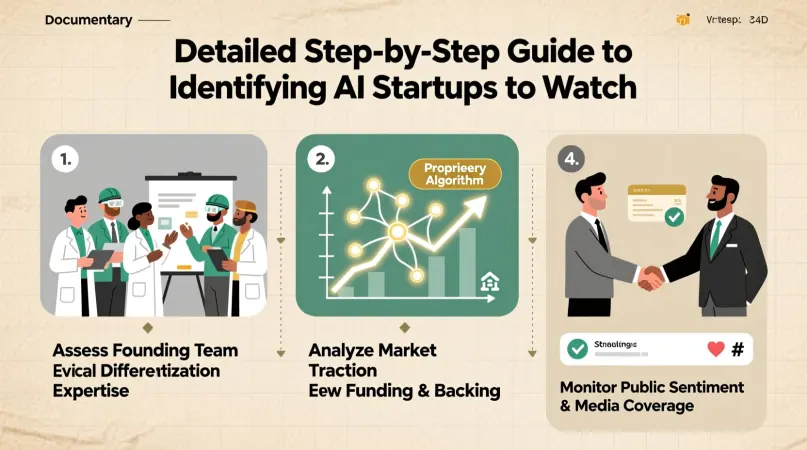
Finding AI startups worth following or investing in requires careful research and strategic thinking. Here’s a step-by-step guide:
Step 1: Understand the AI Landscape
Before diving into specific startups, it’s essential to understand the broader AI ecosystem. Focus on major sectors where AI has significant impact, such as:
- Healthcare (AI diagnostics, drug discovery)
- Finance (fraud detection, algorithmic trading)
- Retail (personalized recommendations, inventory management)
- Transportation (autonomous vehicles, route optimization)
- Customer Service (chatbots, virtual assistants)
Understanding these sectors helps you identify startups that align with growth areas and future demand.
Step 2: Track Funding and Investments
Funding rounds are strong indicators of a startup’s potential. Look for AI startups receiving backing from reputable venture capital firms or angel investors. Funding not only provides resources for growth but also signals market confidence in the startup’s vision.
Step 3: Evaluate the Team and Leadership
A startup’s success heavily depends on its founders and team. Look for:
- Founders with relevant experience in AI or industry expertise
- Diverse teams combining technical and business skills
- Advisors or board members with strong industry connections
A competent team increases the likelihood that the startup can execute its vision effectively.
Step 4: Examine the Technology
The core technology of an AI startup is crucial. Evaluate whether the startup uses:
- Cutting-edge machine learning or deep learning algorithms
- Proprietary datasets or unique data-processing methods
- Scalable and flexible technology platforms
The more innovative and defensible the technology, the higher the startup’s potential.
Step 5: Check Market Traction
Traction indicates that a startup is gaining acceptance. Look for:
- Client base and partnerships
- Revenue growth or pilot program success
- Media coverage and industry recognition
Startups with traction are more likely to survive and grow in competitive markets.
Step 6: Assess Risks and Challenges
Even promising startups face challenges such as:
- Regulatory hurdles
- Competition from established tech giants
- Data privacy and security concerns
Understanding these risks helps set realistic expectations and avoid costly mistakes.
Benefits of AI Startups
Investing in or following AI startups comes with numerous benefits:
- Innovation at the Edge: AI startups often lead technological breakthroughs.
- High Growth Potential: Early-stage AI companies can scale rapidly.
- Diverse Applications: Solutions span multiple industries and problems.
- Improved Efficiency: AI tools reduce manual effort and optimize processes.
- Global Impact: Products and services can reach a worldwide audience quickly.
- Early Investment Opportunities: Following startups early can offer lucrative investment prospects.
Disadvantages / Risks
Despite the benefits, AI startups also carry risks:
- High Failure Rate: Many startups fail due to funding, execution, or market challenges.
- Data Dependence: Poor data quality can compromise AI performance.
- Regulatory Issues: Compliance with laws and standards is critical but complex.
- Competition: Large corporations with AI capabilities can overshadow startups.
- Technical Challenges: Developing AI solutions is resource-intensive and requires specialized expertise.
- Unpredictable Market Response: Even innovative solutions may fail to gain adoption.
Common Mistakes to Avoid
When exploring AI startups, avoid these pitfalls:
- Ignoring Market Fit: Technology alone is not enough; demand must exist.
- Overestimating AI Capabilities: Not all AI solutions can achieve human-level performance.
- Neglecting Data Quality: Poor data leads to inaccurate models.
- Focusing Only on Hype: Avoid investing solely in trending buzzwords.
- Underestimating Costs: AI development can be expensive and time-consuming.
- Skipping Team Evaluation: A strong team is as important as technology.
You May Also Like It
How to Use AI Tools: A Complete Beginner’s Guide
Tech Tutorials for Beginners: A Complete Guide to Getting Started
Latest Tech News Today: Trends, Updates, and Insights
FAQs About AI Startups to Watch
What makes an AI startup promising?
A promising AI startup typically has innovative technology, a strong team, early market traction, and backing from reputable investors.
How do I find AI startups to follow?
You can explore startup accelerators, venture capital portfolios, tech news platforms, and AI industry conferences to discover emerging companies.
Are AI startups profitable early on?
Most AI startups focus on growth and product development initially, so profitability often comes later. Early traction is more important than immediate revenue.
Which industries benefit most from AI startups?
Healthcare, finance, retail, transportation, and customer service see significant benefits from AI applications.
How do AI startups manage data privacy?
Startups follow regulations like GDPR and HIPAA, implement encryption, and anonymize sensitive data to ensure privacy compliance.
Can small investors benefit from AI startups?
Yes, through crowdfunding platforms, startup funds, or venture capital syndicates. However, risks remain high, so research is essential.
How fast do AI startups grow?
Growth varies depending on market demand, funding, and technology adoption. Some scale globally within a few years.
What is the difference between AI startups and traditional tech startups?
AI startups focus primarily on artificial intelligence technologies and data-driven solutions, while traditional tech startups may offer software or services without advanced AI components.
Expert Tips & Bonus Points
- Follow Accelerator Programs: Many AI startups emerge from programs like Y Combinator or Techstars.
- Attend AI Conferences: Industry events reveal upcoming startups and trends.
- Monitor Patents: Startups filing patents often have innovative technology worth tracking.
- Engage with Communities: Online forums and LinkedIn groups provide insights on AI startup progress.
- Diversify Interests: Don’t focus on a single industry; AI is evolving in multiple sectors.
- Track Regulatory Changes: Policies can significantly impact AI adoption and startup viability.
- Test Products Early: Many AI startups offer beta versions—trying them can offer insights into real-world applications.
Conclusion
AI startups to watch are transforming the way we live, work, and interact with technology. These companies are not only shaping the future of business but also solving real-world problems through innovative applications. By understanding the AI landscape, evaluating promising startups, and keeping an eye on market trends, you can stay informed about this rapidly evolving sector.
While the journey with AI startups carries risks such as competition, regulatory hurdles, and high failure rates, the benefits of innovation, efficiency, and global reach make them worth exploring. For investors, tech enthusiasts, or anyone curious about the future, following AI startups provides a unique window into how technology is advancing and which companies are likely to lead the next wave of innovation.
In a world increasingly driven by data and intelligent systems, keeping an eye on AI startups allows you to anticipate changes, seize opportunities, and engage with technology at the forefront of progress. Whether your interest is professional, academic, or personal, AI startups offer lessons, inspiration, and opportunities that are hard to ignore. By staying informed, you can make better decisions, understand emerging technologies, and even contribute to shaping the future of AI.
You May Also Like It
Tech Innovations 2025: A Complete Beginner-Friendly Guide
Wearable Technology Trends: A Complete Guide to the Future of Smart Wearables
Upcoming Smartphones 2025: Features, Trends, and Buying Guide
