


Introduction
Artificial Intelligence (AI) has rapidly transformed the way we live, work, and interact with technology. From simple tasks like organizing your schedule to complex processes such as driving autonomous vehicles, AI applications in daily life are everywhere. Even if you are not a tech expert, you are likely interacting with AI multiple times a day. Voice assistants, recommendation systems, smart home devices, and personalized online experiences are all powered by AI.
The presence of AI has not only simplified routine activities but also improved productivity, efficiency, and convenience. For instance, your smartphone can now predict your typing patterns, suggest replies in messaging apps, and help you plan your day effectively. Similarly, AI-driven tools in healthcare can detect diseases early, while AI in finance helps monitor fraud and provide investment advice.
As AI continues to evolve, understanding its applications in daily life becomes crucial for both personal and professional growth. This article explores the many ways AI is integrated into our everyday experiences, highlighting its benefits, risks, common mistakes, and expert tips to make the most of it. Whether you are a beginner or have some experience with technology, this guide will help you see the practical side of AI and how it touches every aspect of life.
What is AI?
Artificial Intelligence, commonly known as AI, refers to the ability of machines or software to perform tasks that normally require human intelligence. This includes learning, reasoning, problem-solving, understanding language, recognizing patterns, and making decisions.
There are different types of AI:
- Narrow AI: Designed for specific tasks, such as voice assistants or chatbots.
- General AI: Aims to perform any intellectual task a human can do (still in development).
- Machine Learning (ML): A subset of AI where systems learn from data and improve over time.
- Deep Learning: A more advanced form of ML using neural networks to analyze complex data patterns.
In daily life, AI operates mostly as narrow AI, powering tools and devices that simplify tasks, provide insights, and enhance our overall quality of life.
Why is AI Important?
AI has become a cornerstone of modern technology for several reasons:
- Efficiency: AI automates repetitive tasks, saving time and effort.
- Accuracy: Machines can process vast amounts of data without errors, unlike humans who can make mistakes.
- Convenience: Daily activities, from setting reminders to navigating traffic, are easier with AI.
- Personalization: AI customizes experiences based on user preferences, such as streaming services recommending shows or e-commerce platforms suggesting products.
- Problem Solving: Complex issues, like predicting weather patterns or managing supply chains, are handled more effectively by AI systems.
Without AI, many modern conveniences we take for granted would not exist. Its integration into everyday life helps individuals and businesses make informed decisions, reduce effort, and increase overall productivity.
You May Also Like It
Productivity Hacks 2025: Boost Your Efficiency Every Day
DIY Tech Tips: A Complete Guide for Beginners and Enthusiasts
Software Tutorials Step by Step | Easy Learning Guide
Detailed Step-by-Step Guide to AI Applications in Daily Life
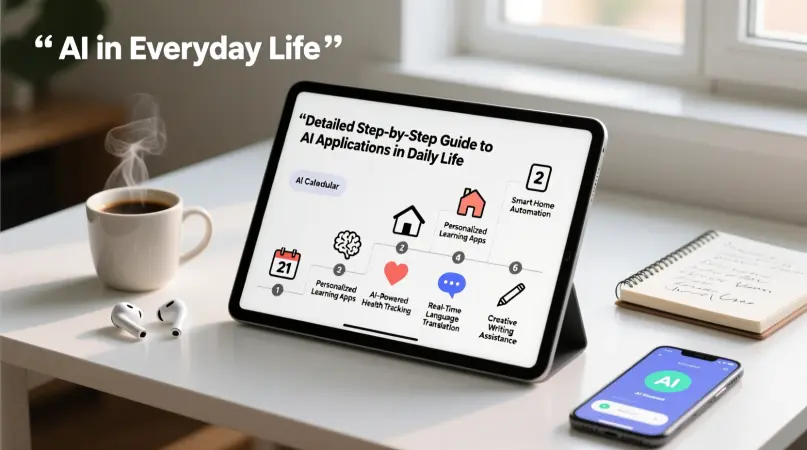
AI has numerous practical applications that can make everyday life smarter and more efficient. Here’s a breakdown:
1. AI in Communication
AI improves communication through smart tools like:
- Voice Assistants: Devices such as smart speakers help with reminders, weather updates, and answering questions.
- Predictive Text and Auto-correct: Email platforms and messaging apps suggest words and correct mistakes.
- Language Translation: AI-powered translation apps help break language barriers instantly.
Example: Google Translate uses AI to recognize languages and offer accurate translations in real time.
2. AI in Healthcare
AI is revolutionizing healthcare by:
- Detecting diseases early using imaging tools.
- Predicting patient outcomes through data analysis.
- Assisting in virtual consultations and personalized treatment plans.
Example: AI algorithms can analyze X-rays to detect fractures faster than a human radiologist.
3. AI in Smart Homes
Smart home devices rely on AI to enhance comfort and security:
- Smart Thermostats: Adjust temperature automatically based on habits.
- Security Cameras: Detect unusual activity and send alerts.
- Voice-Controlled Appliances: Control lights, fans, and entertainment systems through voice commands.
Example: Nest thermostats learn your schedule and optimize energy usage efficiently.
4. AI in Finance
AI simplifies financial tasks by:
- Detecting fraud in real time.
- Offering personalized investment advice.
- Automating customer service in banks through chatbots.
Example: AI-driven apps analyze spending patterns and suggest budgeting strategies.
5. AI in Transportation
AI makes commuting safer and smarter:
- Navigation apps provide real-time traffic updates.
- Autonomous vehicles reduce human error in driving.
- Ride-sharing platforms use AI to match drivers and riders efficiently.
Example: GPS apps like Waze use AI to predict the fastest route based on current traffic conditions.
6. AI in Entertainment
AI enhances our entertainment experiences:
- Movie and music recommendations based on preferences.
- Video game AI that adapts to player behavior.
- Personalized news feeds on social media.
Example: Netflix and Spotify use AI algorithms to suggest content that matches your tastes.
7. AI in Education
AI is transforming learning by:
- Providing personalized learning experiences.
- Automating grading and assessments.
- Offering virtual tutors for extra support.
Example: Online learning platforms use AI to adapt lessons according to a student’s progress.
8. AI in Shopping
AI makes online shopping convenient:
- Suggests products based on browsing and purchase history.
- Optimizes supply chains to ensure fast delivery.
- Chatbots assist with customer queries.
Example: Amazon uses AI to recommend items you are likely to purchase.
Benefits of AI in Daily Life
- Time-Saving: Automates repetitive tasks efficiently.
- Enhanced Accuracy: Reduces human error in decision-making.
- Convenience: Makes everyday activities easier and faster.
- Personalization: Tailors experiences to individual preferences.
- Safety: Improves security in homes and digital spaces.
- Healthcare Support: Facilitates early diagnosis and treatment.
- Cost-Effective: Reduces operational costs for businesses.
Disadvantages / Risks
- Job Displacement: Automation can replace certain jobs.
- Data Privacy Concerns: AI collects and analyzes large amounts of personal data.
- Bias in AI Systems: Poorly trained AI can make unfair decisions.
- Overdependence: Excess reliance on AI may reduce human skills.
- High Initial Costs: Implementing AI systems can be expensive.
- Security Risks: AI systems can be hacked or manipulated.
Common Mistakes to Avoid
- Ignoring Data Privacy: Always be cautious about sharing personal information with AI systems.
- Overreliance on AI: Use AI as a tool, not a replacement for critical thinking.
- Neglecting Updates: AI tools need regular updates for security and efficiency.
- Assuming AI is Always Accurate: Validate AI-generated suggestions or results.
- Lack of Understanding: Learn how AI works to avoid misuse or unrealistic expectations.
You May Also Like It
How to Use AI Tools: A Complete Beginner’s Guide
Tech Tutorials for Beginners: A Complete Guide to Getting Started
Latest Tech News Today: Trends, Updates, and Insights
FAQs
What are some common AI applications in daily life?
AI is used in smart homes, healthcare, finance, transportation, education, and entertainment, making tasks easier and more efficient.
Can AI replace human jobs completely?
While AI automates certain tasks, it is unlikely to replace all jobs. Human creativity, emotional intelligence, and decision-making are still essential.
Is AI safe to use at home?
Yes, most AI applications in homes, such as smart speakers and security devices, are safe, but ensure proper security settings and software updates.
How does AI improve healthcare?
AI analyzes medical data quickly, detects diseases early, assists in diagnosis, and personalizes treatment plans.
Can AI make mistakes?
Yes, AI relies on data and algorithms. If the data is biased or incomplete, AI can provide inaccurate results.
Do I need technical skills to use AI applications?
No, many AI tools are user-friendly and designed for beginners. Examples include voice assistants, navigation apps, and recommendation systems.
How does AI personalize my online experience?
AI tracks your preferences, browsing habits, and interactions to suggest content, products, or services tailored to your needs.
Is AI expensive to implement?
While advanced AI systems can be costly, many everyday AI applications like mobile apps, smart devices, and online tools are affordable for general users.
Expert Tips & Bonus Points
- Start Small: Begin with simple AI tools like virtual assistants or smart apps.
- Stay Updated: Keep your AI software and devices updated for security and efficiency.
- Protect Your Data: Use strong passwords, privacy settings, and secure networks.
- Combine AI with Human Skills: Use AI to support, not replace, critical thinking and creativity.
- Experiment with AI Learning Tools: Online courses and tutorials can help you understand AI better.
- Evaluate AI Recommendations: Always cross-check important AI-generated results.
Bonus Tip: Integrate multiple AI tools for a smarter lifestyle. For example, combine a smart home system with a calendar app to automate both home environment and daily schedules.
Conclusion
AI applications in daily life have become indispensable, making tasks simpler, faster, and more efficient. From healthcare and finance to entertainment and education, AI touches nearly every aspect of our routines. It improves accuracy, personalizes experiences, enhances safety, and saves time. However, like any technology, it comes with risks such as privacy concerns, job displacement, and potential biases.
The key to maximizing AI benefits is to use it wisely—understanding its capabilities, limitations, and best practices. By starting with simple applications, protecting personal data, and staying informed, anyone can leverage AI to improve daily life. Embracing AI responsibly allows us to enjoy its convenience, innovation, and efficiency while minimizing potential downsides. AI is not just the future; it is already a part of our present, making life smarter and more connected for everyone.
You May Also Like It
Tech Innovations 2025: A Complete Beginner-Friendly Guide
Wearable Technology Trends: A Complete Guide to the Future of Smart Wearables
Upcoming Smartphones 2025: Features, Trends, and Buying Guide
